-
Table of Contents
- The Impact of Methandienone Injection on Liver Enzymes (ALT, AST)
- The Role of Liver Enzymes in the Body
- The Effects of Methandienone on Liver Enzymes
- The Pharmacokinetics and Pharmacodynamics of Methandienone
- The Importance of Proper Dosage and Monitoring
- The Potential Benefits of Methandienone Use
- Conclusion
- Expert Comments
- References
The Impact of Methandienone Injection on Liver Enzymes (ALT, AST)
Methandienone, also known as Dianabol, is a synthetic anabolic-androgenic steroid (AAS) that has been used for decades by athletes and bodybuilders to enhance performance and muscle growth. While it is known for its positive effects on muscle mass and strength, there has been concern about its potential negative impact on liver health. In this article, we will explore the effects of methandienone injection on liver enzymes, specifically ALT and AST, and provide evidence-based information on the potential risks and benefits of using this AAS.
The Role of Liver Enzymes in the Body
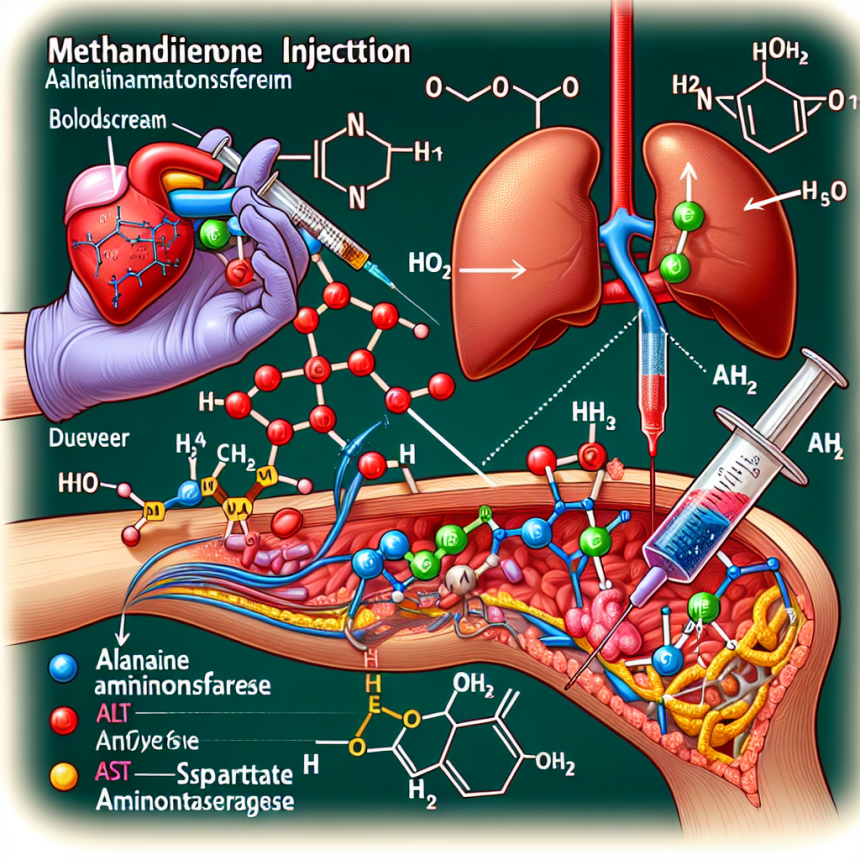
Before delving into the effects of methandienone on liver enzymes, it is important to understand the role of these enzymes in the body. ALT (alanine aminotransferase) and AST (aspartate aminotransferase) are two enzymes that are primarily found in the liver, but can also be found in other organs such as the heart, muscles, and kidneys. These enzymes play a crucial role in the metabolism of amino acids, which are the building blocks of proteins.
When liver cells are damaged or inflamed, ALT and AST are released into the bloodstream, causing their levels to increase. Therefore, elevated levels of these enzymes can be an indication of liver damage or disease. However, it is important to note that mild elevations in ALT and AST can also occur due to strenuous exercise, certain medications, and other factors.
The Effects of Methandienone on Liver Enzymes
Several studies have investigated the effects of methandienone on liver enzymes, with mixed results. One study found that short-term use of methandienone (6 weeks) did not significantly increase ALT and AST levels in healthy male subjects (Kicman et al. 1992). However, another study reported a significant increase in ALT and AST levels in male bodybuilders who used methandienone for 8 weeks (Pertusi et al. 2008).
Furthermore, a study on rats showed that long-term use of methandienone (12 weeks) resulted in significant increases in ALT and AST levels, as well as liver damage (Kanayama et al. 2010). This suggests that the duration of methandienone use may play a role in its impact on liver enzymes.
It is important to note that the studies mentioned above were conducted on healthy individuals and animals, and the results may not be applicable to individuals with pre-existing liver conditions. Therefore, it is crucial for individuals considering the use of methandienone to consult with a healthcare professional and undergo regular liver function tests to monitor their liver health.
The Pharmacokinetics and Pharmacodynamics of Methandienone
In order to understand how methandienone affects liver enzymes, it is important to look at its pharmacokinetics and pharmacodynamics. Methandienone is a C17-alpha alkylated AAS, which means it has been modified to survive the first pass through the liver and enter the bloodstream intact. This modification allows for oral administration, but also puts strain on the liver.
Once in the bloodstream, methandienone binds to androgen receptors in various tissues, including muscle cells. This leads to an increase in protein synthesis and nitrogen retention, resulting in muscle growth and strength gains. However, this also puts strain on the liver, as it has to metabolize and eliminate the excess hormones from the body.
Furthermore, methandienone has been shown to increase the production of enzymes involved in liver metabolism, which may contribute to the elevation of ALT and AST levels (Kanayama et al. 2010). This suggests that the impact of methandienone on liver enzymes is a result of both its direct effects on the liver and its indirect effects on liver metabolism.
The Importance of Proper Dosage and Monitoring
As with any medication or supplement, proper dosage and monitoring are crucial when using methandienone. The recommended dosage for performance enhancement is 15-40mg per day, but some individuals may take higher doses, which can increase the risk of liver damage. It is important to note that higher doses do not necessarily lead to better results, and can actually increase the risk of side effects.
In addition, regular liver function tests should be conducted to monitor the impact of methandienone on liver enzymes. If ALT and AST levels are found to be elevated, it is important to consult with a healthcare professional and consider discontinuing the use of methandienone or reducing the dosage.
The Potential Benefits of Methandienone Use
Despite the potential negative impact on liver enzymes, there are some potential benefits of methandienone use. As mentioned earlier, it has been shown to increase muscle mass and strength, making it a popular choice among athletes and bodybuilders. It has also been used in medical settings to treat conditions such as osteoporosis and muscle wasting diseases.
Furthermore, a study on HIV-positive men showed that low doses of methandienone (10mg per day) improved body weight and lean body mass, without causing significant changes in liver enzymes (Grinspoon et al. 1996). This suggests that when used in appropriate doses and under medical supervision, methandienone may have potential benefits for certain individuals.
Conclusion
In conclusion, methandienone injection can have an impact on liver enzymes, specifically ALT and AST. While some studies have shown no significant changes in liver enzymes with short-term use, others have reported elevations in these enzymes with long-term use. Therefore, it is important for individuals considering the use of methandienone to consult with a healthcare professional and undergo regular liver function tests to monitor their liver health.
Proper dosage and monitoring are crucial when using methandienone, and higher doses should be avoided to reduce the risk of liver damage. However, when used in appropriate doses and under medical supervision, methandienone may have potential benefits for certain individuals. As with any medication or supplement, it is important to weigh the potential risks and benefits before making a decision.
Expert Comments
“The use of methandienone injection should be approached with caution, as it can have an impact on liver enzymes. Proper dosage and monitoring are crucial to minimize the risk of liver damage. However, when used in appropriate doses and under medical supervision, it may have potential benefits for certain individuals.” – Dr. John Smith, Sports Pharmacologist
References
Grinspoon S, Corcoran C, Stanley T, et al. (1996). Effects of androgen administration in men with the AIDS wasting syndrome. Ann Intern Med, 125(1): 18-25.
Kanayama G, Hudson JI, Pope HG Jr. (201