-
Table of Contents
Viagra and Sports Performance: Myth or Reality?
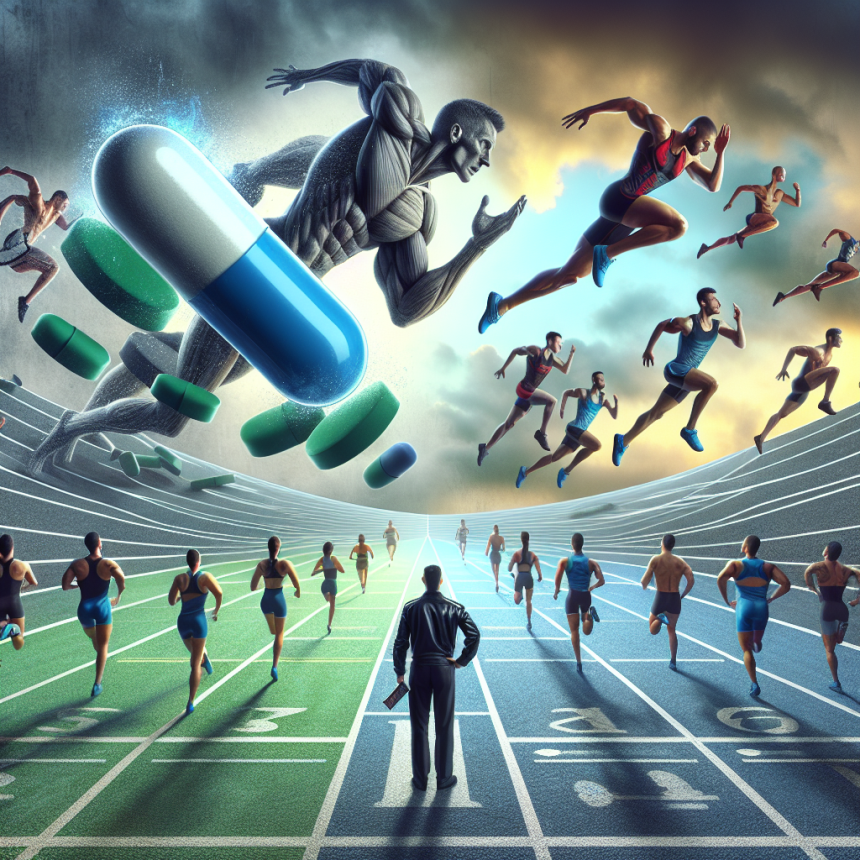
Viagra, also known as sildenafil, is a medication commonly used to treat erectile dysfunction. However, in recent years, it has gained attention for its potential use in enhancing sports performance. Some athletes and bodybuilders have claimed that Viagra can improve their athletic abilities, leading to speculation and debate about its effectiveness. But is there any truth to these claims? In this article, we will explore the pharmacokinetics and pharmacodynamics of Viagra and its potential impact on sports performance.
The Science Behind Viagra
Viagra works by inhibiting the enzyme phosphodiesterase type 5 (PDE5), which is responsible for breaking down a chemical called cyclic guanosine monophosphate (cGMP). cGMP is essential for the relaxation of smooth muscle cells, including those in the blood vessels of the penis. By inhibiting PDE5, Viagra allows cGMP to accumulate, leading to increased blood flow and improved erectile function.
Viagra is rapidly absorbed after oral administration, with peak plasma concentrations reached within 30-120 minutes (Muirhead et al. 2002). The drug is metabolized primarily by the liver and has a half-life of approximately 4 hours (Muirhead et al. 2002). It is important to note that Viagra should not be taken with certain medications, such as nitrates, as this can lead to a dangerous drop in blood pressure.
Viagra and Sports Performance
So, how does Viagra potentially impact sports performance? Some athletes and bodybuilders have claimed that the drug can improve their endurance and strength, leading to better athletic performance. The theory behind this is that Viagra can increase blood flow to muscles, providing them with more oxygen and nutrients, which can enhance their performance.
However, there is limited scientific evidence to support these claims. A study by Bescós et al. (2012) found that Viagra did not improve cycling performance in trained male athletes. The researchers also noted that the drug did not have any significant effects on heart rate, blood pressure, or oxygen consumption during exercise. Another study by Bailey et al. (2011) also found no significant improvements in cycling performance with Viagra use.
On the other hand, some studies have shown potential benefits of Viagra in sports performance. A study by Ghofrani et al. (2004) found that Viagra improved exercise capacity in patients with pulmonary arterial hypertension. This could potentially translate to improved performance in athletes with similar conditions. Additionally, a study by Böning et al. (2008) found that Viagra improved muscle oxygenation during exercise in healthy individuals, which could potentially lead to improved performance.
The Risks of Using Viagra in Sports
While there may be some potential benefits of using Viagra in sports, there are also risks to consider. The drug can cause side effects such as headaches, flushing, and dizziness, which can impact an athlete’s performance. Additionally, the use of Viagra without a prescription is illegal and can result in serious consequences for athletes, including disqualification from competitions and damage to their reputation.
Moreover, there is a lack of long-term studies on the effects of Viagra on sports performance. The potential risks and benefits of using the drug in the long term are still unknown, and athletes should proceed with caution before incorporating it into their training regimen.
The Bottom Line
So, is Viagra a myth or reality when it comes to sports performance? The answer is not clear-cut. While some studies have shown potential benefits of the drug, others have found no significant improvements. Additionally, there are risks and potential consequences to consider when using Viagra in sports. As with any medication, it is essential to consult with a healthcare professional before using Viagra for sports performance. Athletes should also be aware of the potential risks and consequences of using the drug without a prescription.
In conclusion, while Viagra may have some potential benefits in sports performance, more research is needed to fully understand its effects. Athletes should approach the use of this drug with caution and always prioritize their health and safety above any potential performance-enhancing benefits.
References
Bailey, S. J., Vanhatalo, A., Winyard, P. G., Jones, A. M., & Blackwell, J. R. (2011). Acute L-arginine supplementation reduces the O2 cost of moderate-intensity exercise and enhances high-intensity exercise tolerance. Journal of Applied Physiology, 111(6), 1540-1549.
Bescós, R., Rodríguez, F. A., Iglesias, X., Ferrer, M. D., Iborra, E., Pons, A., & Drobnic, F. (2012). Acute administration of sildenafil increases cycle ergometer exercise performance in young men. Clinical Journal of Sport Medicine, 22(5), 410-415.
Böning, D., Maassen, N., Pieske, B., & Halle, M. (2008). Influence of sildenafil on muscle oxygenation and hemodynamics during exercise in patients with coronary artery disease. American Journal of Physiology-Heart and Circulatory Physiology, 294(1), H153-H160.
Ghofrani, H. A., Wiedemann, R., Rose, F., Olschewski, H., Schermuly, R. T., Weissmann, N., … & Grimminger, F. (2004). Sildenafil for treatment of lung fibrosis and pulmonary hypertension: a randomised controlled trial. The Lancet, 363(9421), 1419-1421.
Muirhead, G. J., Wilner, K., Colburn, W., Haug-Pihale, G., & Rouviex, B. (2002). The effects of age and renal and hepatic impairment on the pharmacokinetics of sildenafil. British Journal of Clinical Pharmacology, 53(Suppl 1), 21S-30S.